

The Centre for the Less Good Idea
William Kentridge & Bronwyn Lace
Season Two invites visitors on an immersive journey into the creative world of William Kentridge and The Centre for The Less Good Idea, co-founded by the South African artist and Bronwyn Lace in 2016.
Rooted in their home context of South Africa, this unique collective of artists, performers, choreographers, and musicians rediscovers Valdemars Slot as a living site for creativity and interpretation. A significant programme of artist residencies and site-specific installations culminates in two weekends of performance, taking place across the palace and grounds in May and August 2026.
Two creative residencies see Bronwyn Lace, Neo Muyanga, and three South African performers, collaborate with local artists to engage collectively with this rich heritage site. Delving into Valdemars Slot’s vast archives, the artists explore a dialogue between African music and the compositions created and played at the estate hundreds of years ago. Born out of William Kentridge’s experimental visual language, their methodology results in a body of work that develops and evolves throughout the season.
Meanwhile, William Kentridge leads visitors through the palace in a three-part installation spanning sculpture, drawing, and film. These works demonstrate the wry interrogation of historical narrative for which the artist is best known, in dialogue with the records and maps that make up Valdemars Slot’s physical archive, and collection of eighteenth-century portraiture.
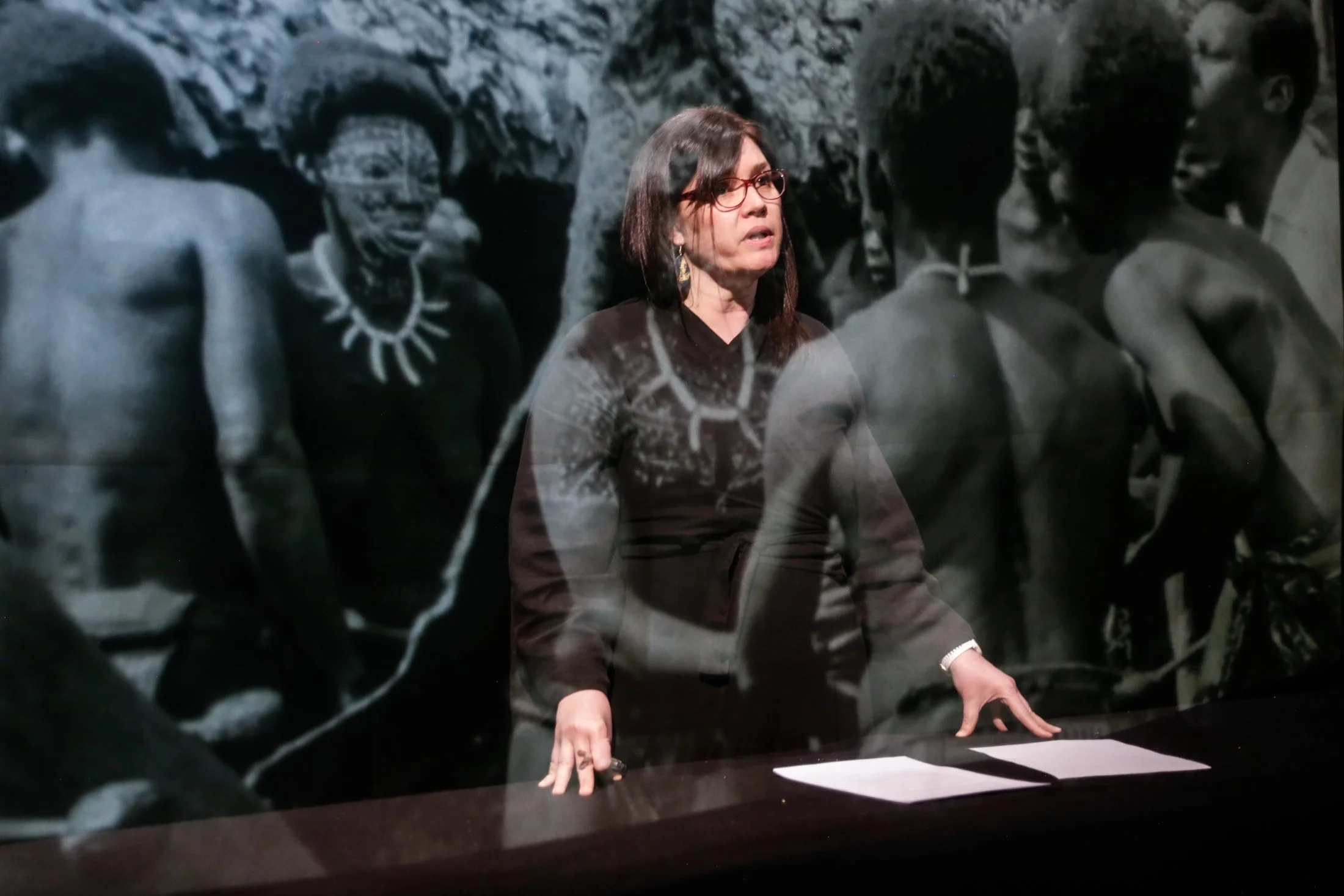
Across the estate in the former Corn Barn, Bronwyn Lace’s film Feast or Famine explores socio-political cycles of creation and destruction through imagery drawn from the natural world. Anchored in the context of post-apartheid South Africa, her installation carries universal resonance, confronting dark themes with a message of hope for the future. The installation forms the stage for interdisciplinary performance by. a full cast of South African performers.
William Kentridge
South African, b. 1955
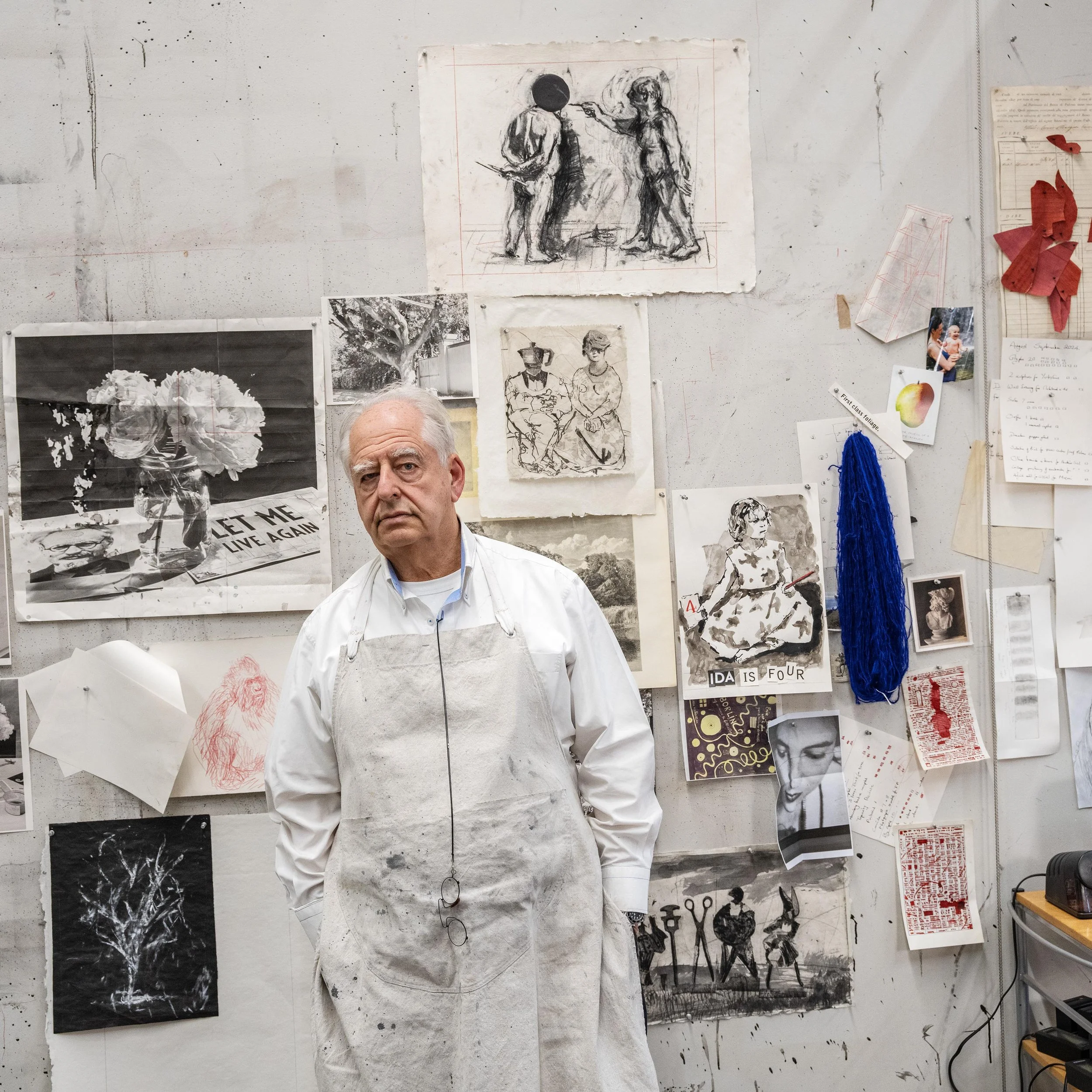
Encompassing diverse media and subject matter, William Kentridge’s practice is deeply informed by the socio-political context of South Africa. The artist is renowned for his playful, complex works that question established narratives and reject certainty. At Valdemars Slot, Kentridge responds to the seventeenth-century palace with three installations that reveal history as partial, shifting, and ripe for reinterpretation.
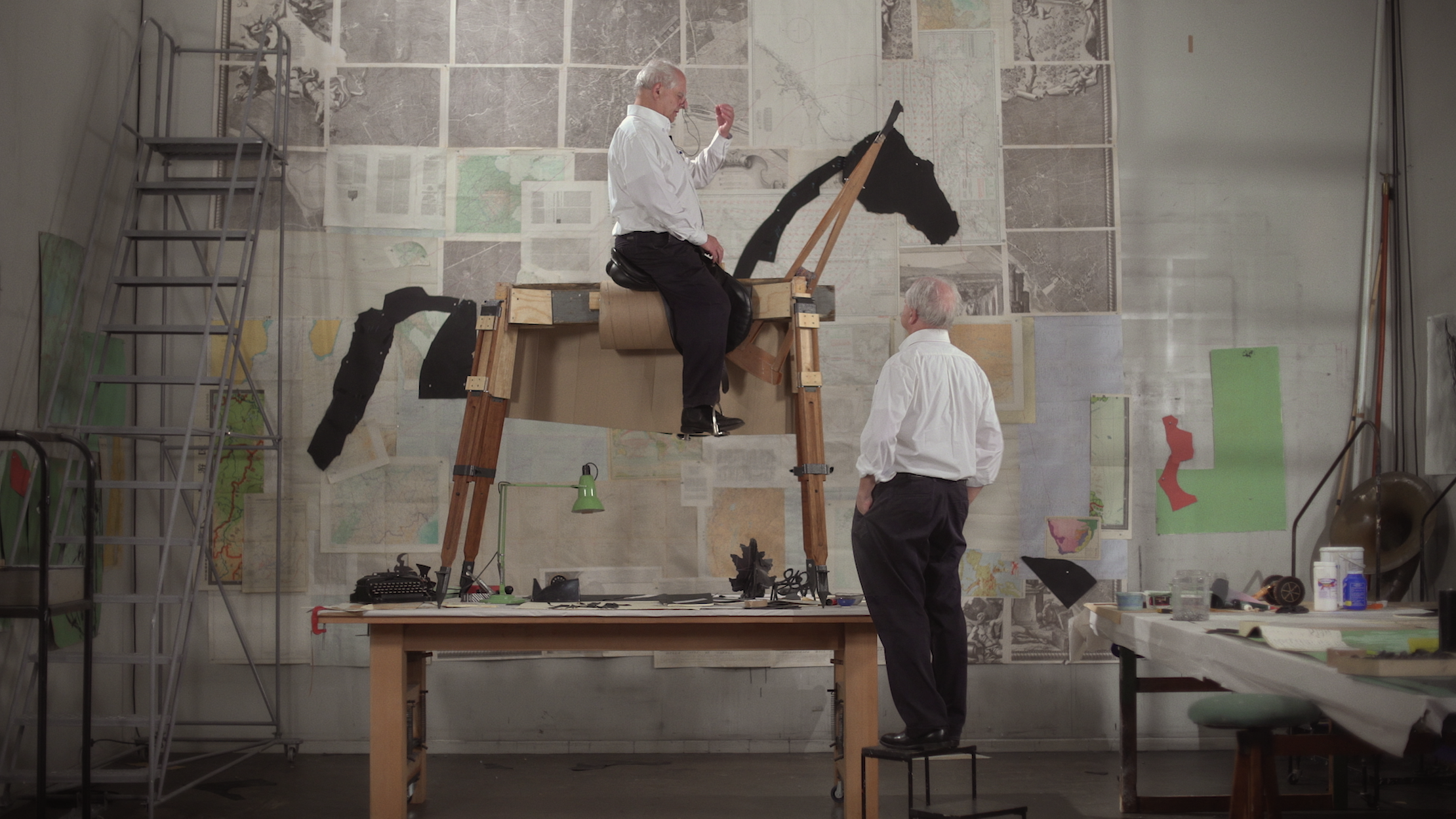
A parodic self-portrait welcomes visitors to the palace Entrance Hall. Clothed in a white shirt, a cardboard cut-out sits astride his tripod horse like a makeshift theatre prop. A doorway to the adjacent Kings Room reveals a mirror image from the eighteenth century: painted monarchs parade across the walls with rococo flourish. Surrounded by maps and materials from the palace archives, Kentridge’s ludic assemblage calls historical record into question by staging the raw materials through which it’s conveyed.
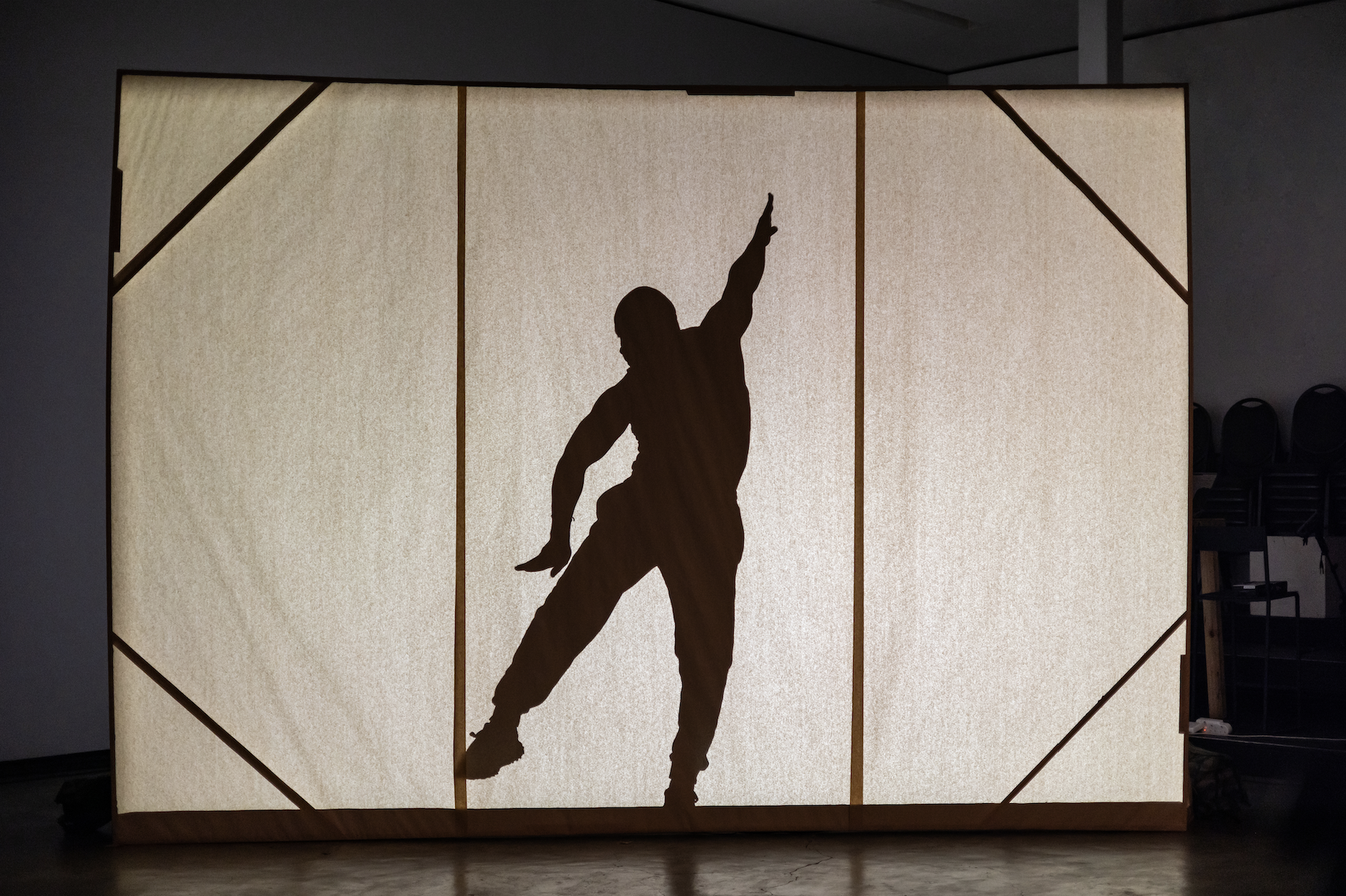
This playful introduction prepares visitors for a glimpse backstage, as Kentridge’s expressive gestures envelop the steep attic staircase. Legible only from the bottom of the stairs, his famous Fire Walker shifts and fragments as one ascends. A celebrated anti-monument, the Fire Walker was originally created for the City of Johannesburg in 2010. The image foregrounds the usually unseen, overlooked lives of the city’s poorest labourers, inviting parallels with the servants who used these stairs in centuries’ past. The figure’s fragmenting form embodies the privilege of historical hindsight, whilst speaking to the subjects’ precarious lives.
Transported through this enclosed passageway, visitors find themselves in an imaginative, intimate world. The vast attic is punctuated by two large screens, surrounded by chairs and cushions as if to recall a childhood fort, or studio late at night. This sets the scene for two short film collections, which further explore the creative world that Kentridge and The Centre for the Less Good Idea inhabit: Self-Portrait As a Coffee Pot and The Long Minute, curated by Bronwyn Lace. Born out of the Covid-19 lockdowns, these films offer intimate insights into the life of Kentridge’s studio, his artistic approach, and the energy of the Johannesburg-based incubator space.
“Often, you start with a good idea, It might seem crystal clear at first, but when you take it off the proverbial drawing board, cracks and fissures emerge in its surface, and they cannot be ignored. It is in following the secondary ideas, those less good ideas coined to address the first idea’s cracks, that The Centre nurtures, arguing that in the act of playing with an idea, you can recognise those things you didn’t know in advance but knew somewhere inside of you.”
— William Kentridge, 2016
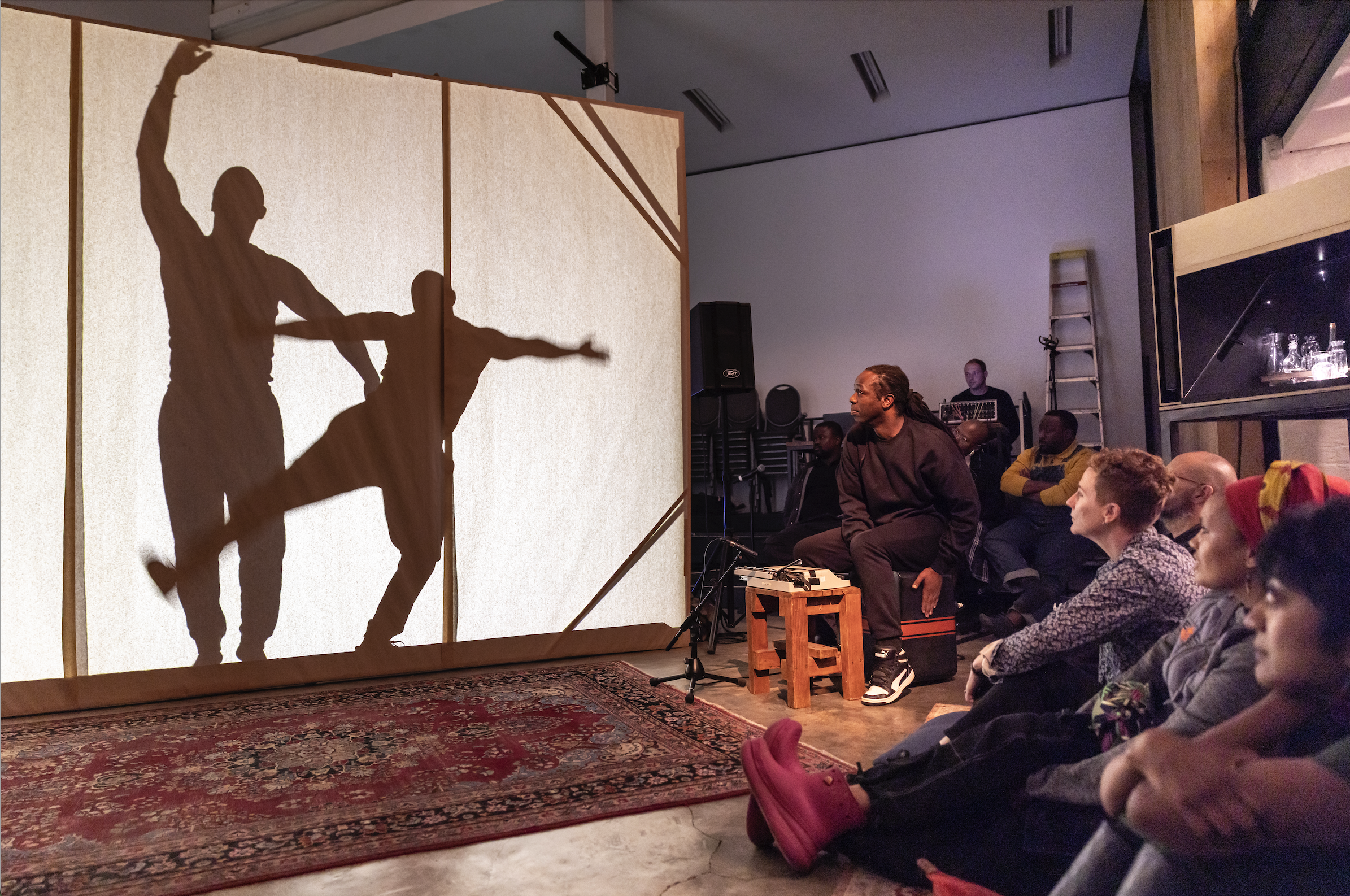
The Centre for the Less Good Idea
Johannesburg, est. 2016
Valdemars Slots Arts Foundation invites The Centre for the Less Good Idea to relocate from Johannesburg to the palace for two periods of residency between 4–26 May and 17–31 August. An ambitious programme of archival research, workshops, and encounters culminates in two weekends of performance, in collaboration with local artists.
The Centre for the Less Good Idea aims “to find the less good idea by creating and supporting experimental, collaborative and cross-disciplinary arts projects”, resulting in short-form works without a natural home in theatre or gallery. Drawing on the conceptual as well as visual identity of William Kentridge’s practice, the Centre is both a physical incubator and a touring space for cross-cultural encounter. Engaging Valdemars Slot as an evolving collage of interpretation and display, the artists test ideas that emerged from a specifically South African context to challenge and evolve the collaborative strategies that the Centre advocates for.
During their residency, regular contributors to the Johannesburg-based incubator, Anathi Conjwa, Micca Manganye, Neo Muyanga, and Teresia Phuti develop workshops and performances in collaboration with Danish partners, including accordionist Andreas Borregaard and cellist Halina Wigocka Wamberg. The programme is guided by a period of archival research, where music and choreography originating in Africa encounters a compendium of eighteenth- and nineteenth-century compositions created and played at the palace.
Spontaneous activations taking place in May, which immerse the audience in their working process, evolve into larger-scale compositions for choral and dance groups this summer. Their primary stage is a shadow theatre erected inside the former Carriage Barn. Combining pre-recorded film with live performance, these activations create a layered and evolving space, which acts as a metaphor for the way that memory and history are transformed and distorted over time.
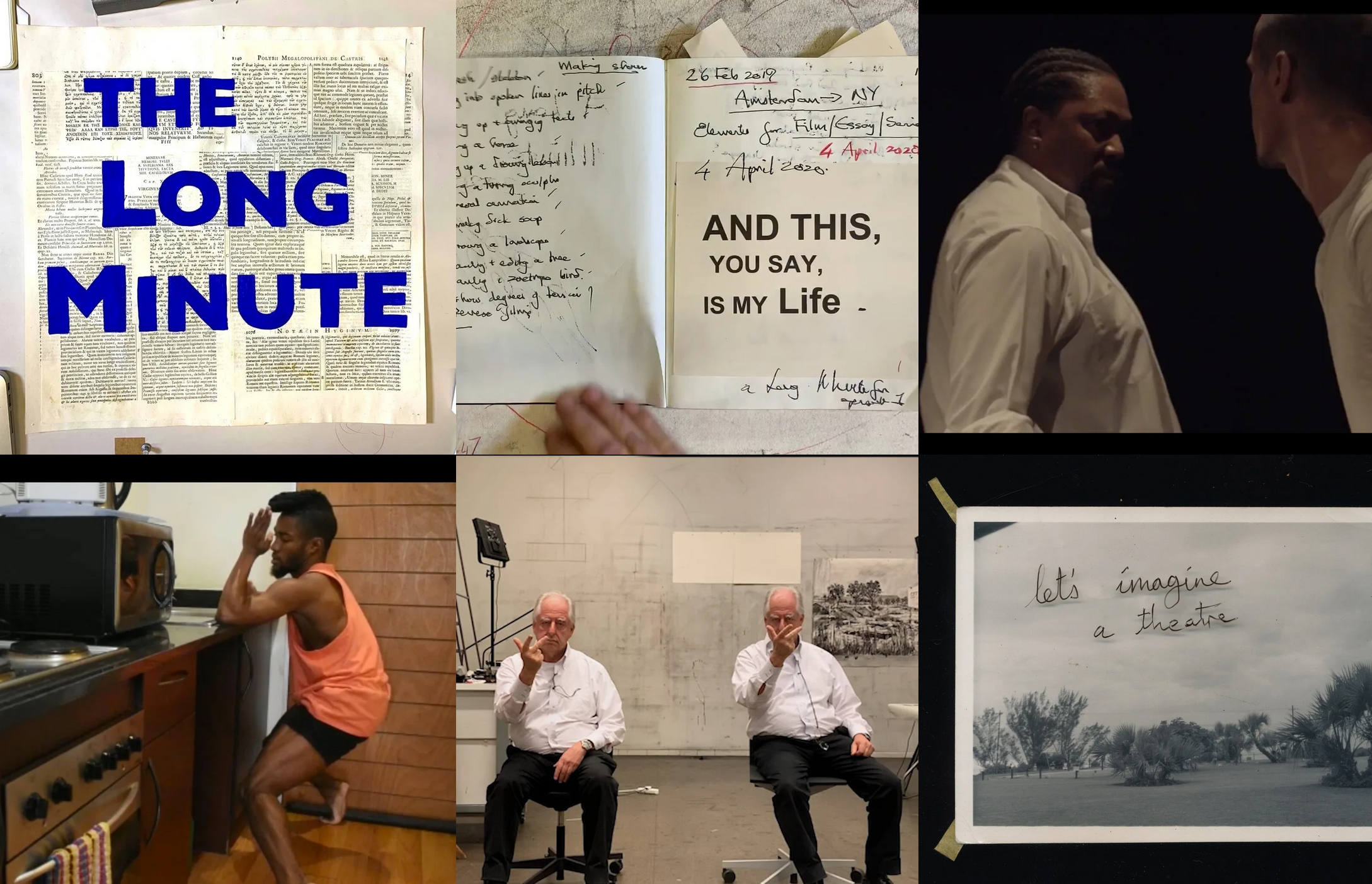
Valdemars Slot is collaborating with The Centre for the Less Good Idea to develop a new series of films as part of The Long Minute.
The Long Minute is a series of experimental short videos made in the studios and homes of artists, offering engaging insights into diverse creative practices. Originating in the Covid-19 lockdown, this ongoing project began as a method of continuing in the virtual realm the experimental encounters that are vital to the Centre’s approach. Created in the spirit of open and cross-disciplinary dialogue, these films unpack the nature of performance and artistic process, and act as prompts for new creative work.
Interspersed with new films made by South African artists and Danish collaborators are several Long Minutes created by William Kentridge. These miniature works represent potent threads within his larger body of work. They also reveal Kentridge’s role as a mentor at the Centre, drawing out the ways in which his collaborative approach shapes and animates the programme.
“My communal practice involves co-founding, with William Kentridge, The Centre for the less Good Idea in Johannesburg in 2016. Today, I am its director and lead its international projects. The Centre is a physical and immaterial space to pursue incidental discoveries made in the process of producing work. We take our impulse from the Setswana proverb ‘E a re ngaka kgolo go retelelwa, go alafe ngakana/ If the good doctor can’t cure you, find the less good doctor’.”
– Bronwyn Lace
Bronwyn Lace
Feast or Famine
South African, b. 1980
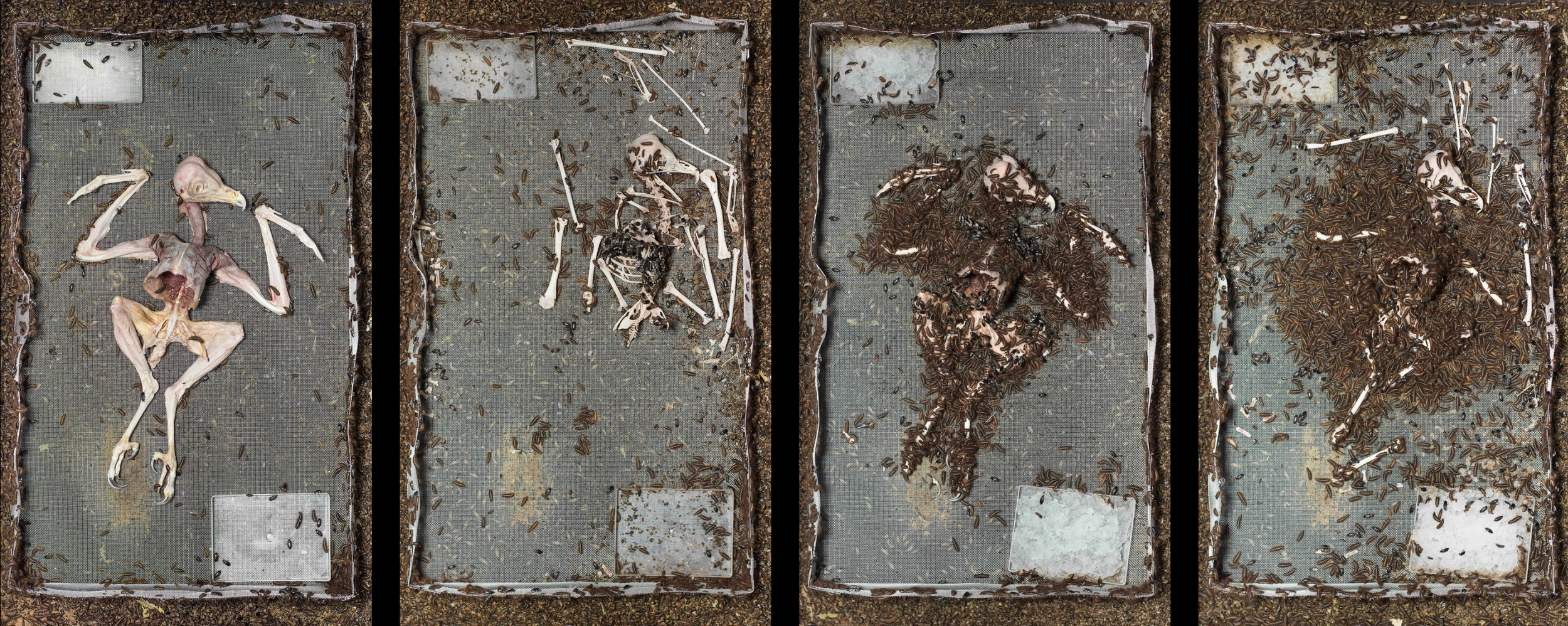
In the former Corn Barn, live performance interacts with video installation in an exhibition that explores mortality, mourning, fragility, and transition. Bronwyn Lace’s film, Feast or Famine, evokes the legacy of apartheid and colonialism through universal forms, rooted in the natural world.
Projected from high in the rafters, the footage shows Southern African carrion beetles feasting on the body of a European Barn Owl. The insects’ frenetic movement illuminates the raw space to the staccato rhythm of time-lapse photography. The bird is enveloped by the jittering forms, which pick clean the bones before departing again, leaving an image that speaks to the harsh inevitability of change and loss.
Originally captured in the basement of Vienna’s Natural History Museum, the film is transformed by South African musicians Nhlanhla Mahlangu and Xolisile Bongwana. Their song of mourning and loss animates the barn’s church-like vaults with visceral emotion, lending the film an almost sacred sense of human ritual and connection. Evoking the way in which history is retold and reinterpreted, artists from the Centre discover the installation again through live performance in May and August.
Artist Bios
William Kentridge (b. 1955, Johannesburg)
Kentridge lives and works in Johannesburg, South Africa. His practice spans drawings, films, theatre and opera. Recent solo exhibitions include those at Yorkshire Sculpture Park, Wakefield (2025); MFA Houston, Texas (2023); The Broad, Los Angeles (2022); Royal Academy of Arts, London (2022); and Kunstmuseum Basel, Switzerland (2019). A major travelling retrospective opened at the Whitechapel Gallery, London in 2016 before touring internationally, including to the Louisiana Museum of Modern Art, Humlebæk and the Museum der Moderne Salzburg (2017). Kentridge has participated in Documenta (2012, 2002, 1997) and Venice Biennale (2015, 2005, 1999, 1993).
Bronwyn Lace (b. 1984 Milton Keynes, UK)
Lace works between South Africa and Austria, with a practice centred on collaborative and interdisciplinary forms of artistic production. She collaborated with William Kentridge in founding The Centre for the Less Good Idea in 2016 in Johannesburg, where she serves as Director. In 2020 Lace co-founded The Zone in Vienna, a collective exploring new approaches to inquiry and curation across the arts, sciences and philosophy.
The Centre for the Less Good Idea (est. 2016, Johannesburg)
Founded by William Kentridge and Bronwyn Lace, The Centre creates and supports experimental, collaborative and cross-disciplinary artistic projects through short, intensive periods of research and performance. Since 2024 its programme has been led by Neo Muyanga, working alongside SO | The Academy for the Less Good Idea, directed by Athena Mazarakis, and The Centre Outside The Centre, led by Bronwyn Lace. Recent projects include those at The Royal Academy and The Barbican in London, Komische Opera, Berlin, and RedCat Theatre, Los Angeles amongst others.
Artists in residence: Anathi Conjwa, Bronwyn Lace, Micca Manganye, Neo Potlako Muyanga, and Teresia Phuti Mojela
Local collaborators: Andreas Borregaard and Halina Wamberg Wigocka